DOCUMENTARY RESOURCES

On this page, you can find all the resources related to the Feminists in Action project. Reports, additional information and figures on the project or studies on the needs, challenges and funding situation of organisations on the ground can be found here. Enjoy reading!

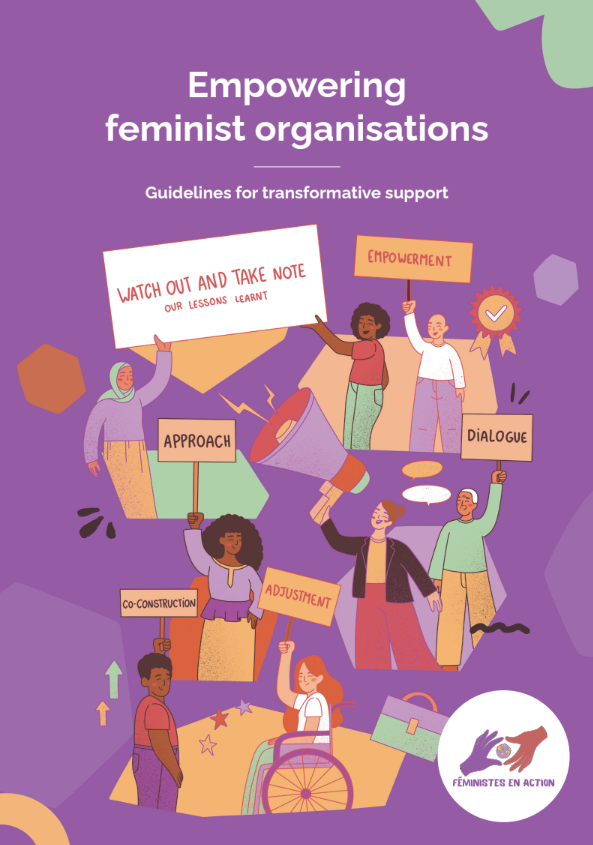
After four years in operation, the Feminists in Action project has supported over 200 organizations and just as many projects in 30 countries worldwide. In addition to granting subsidies, the project has also set up a support system to help the organizations it supports to become more self-sufficient.  Far from being a detail, this support system was at the heart of the FEA project, and was the subject of a capitalization process designed to examine the various support practices deployed. Under the supervision of partner Equipop, this capitalization resulted in the publication of a booklet entitled: “Guidelines for transformative support”. Find out more!

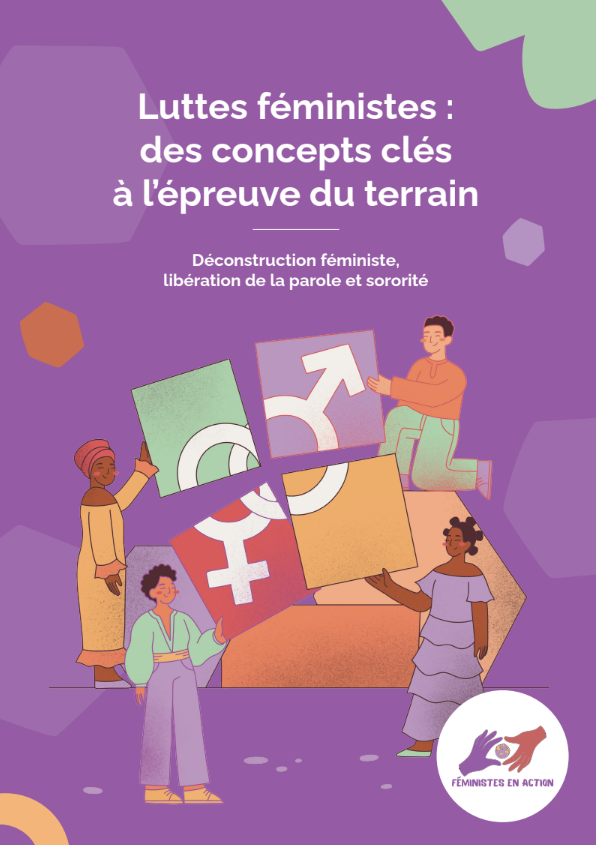
Feminist Struggles: Key Concepts Put to the Test in the Field

In the Africa region, about ten organizations supported by the Feminists in Action project received an introduction to—or even
capacity-building in—the area of knowledge capture. Specifically, the aim was to assist them in documenting their most significant practices and experiences (“gems”). These “gems” represent social innovations that these organizations have been able to develop thanks to their strong local roots and their in-depth knowledge of the specific challenges facing the communities with which they interact.
This document aims to explain these key concepts, highlight the challenges they present, and demonstrate how organizations supported by the Feminists in Action project address these challenges through experiences drawn from diverse intervention contexts.

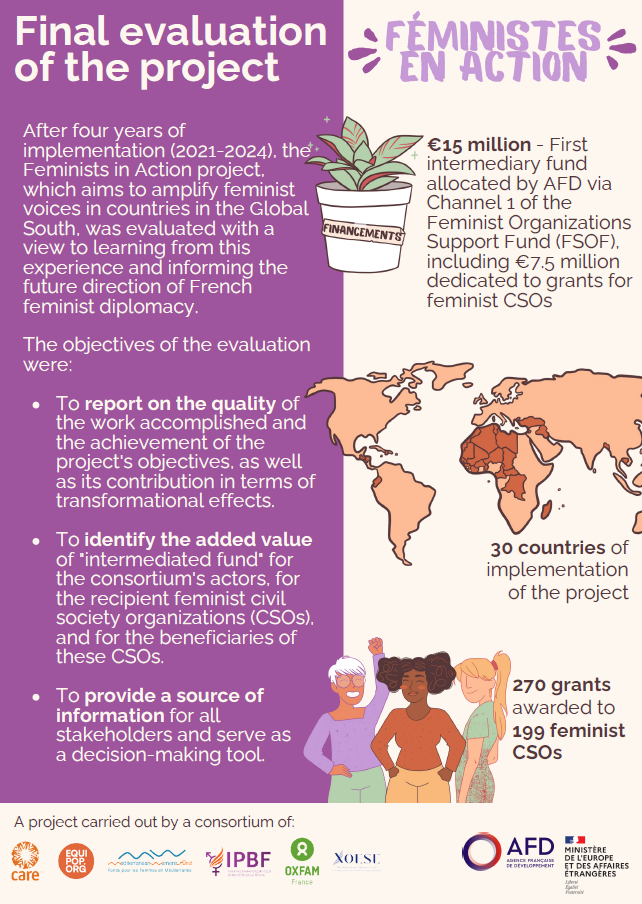
The evaluation carried out by RED MANGROVE aims to provide an overall assessment of the results achieved, measure the transformational effects on the recipient feminist CSOs, assess the added value of the intermediary fund, and formulate strategic and operational recommendations to guide the continuation of the initiative. The evaluation was based on a mixed methodology combining interviews, in-depth document analysis, field missions in six countries, a benchmark of other projects carried out under Channel 1 of the FSOF, and a broad consultation of stakeholders, totaling 90 interviews. Case studies also enabled an in-depth analysis of the project’s impact, identifying success factors and obstacles encountered, and assessing the sustainability of the changes observed.

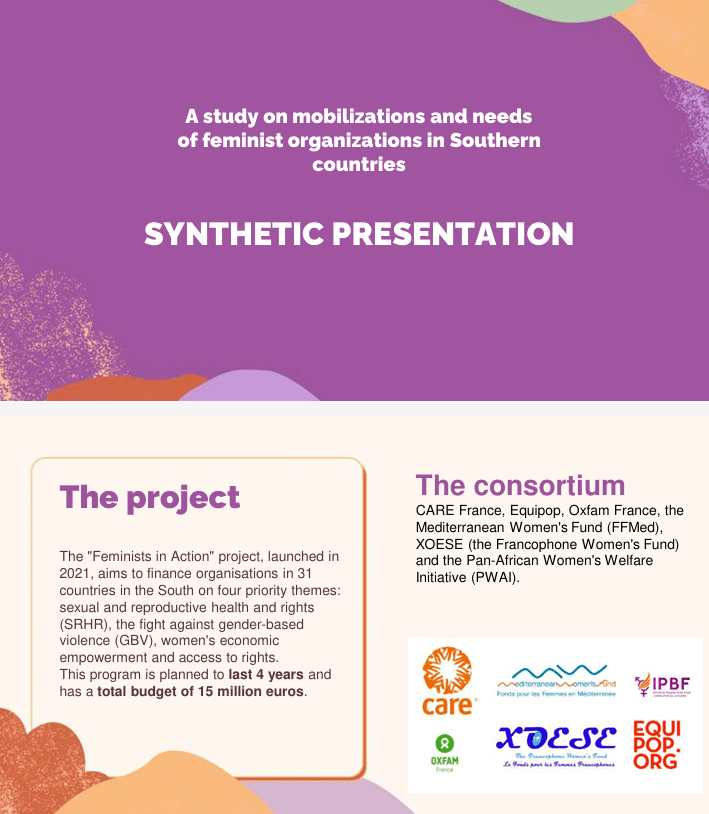
Feminists in Action called on Groupe Egae to assess the state of the feminist movement in the various countries where the project is being implemented. This study highlights the gap between existing funding and what feminist CSOs actually need. In all the countries studied, women are coming together in organizations to defend their rights and support each other. These organizations vary greatly in terms of structure and resources, with the majority being small structures with limited budgets and few or no employees. From the perspective of CSOs, the main need remains funding to ensure both their autonomy and their structure. Three conditions appear essential to meet the needs of CSOs. Funding must be tailored to women’s needs, flexible in order to adapt to changing local contexts, and sustainable in order to enable organizations to structure themselves, stabilize their existence, plan for the long term, and build long-term mobilization and action.

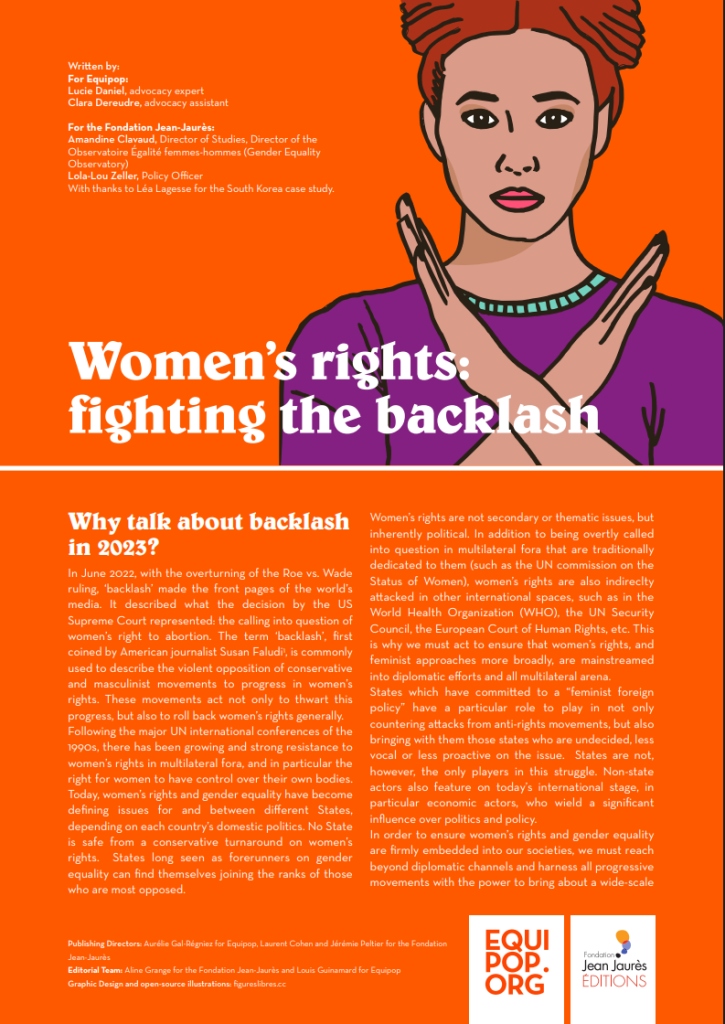
The Jean-Jaurès Foundation and Equipop have published an analysis of the backlash against women’s rights and made recommendations for France to pursue a truly feminist foreign policy. This report examines the situation in twelve countries and proposes three essential recommendations to counter the backlash. The report aims to spark a political response to anti-rights movements. It is a call to action to advance feminist principles in three steps: to decipher the strategy of conservative movements that trample on women’s rights and, more broadly, human rights; through various country examples, to analyze the implementation of the conservative movements’ agenda in order to better combat them; to issue a series of recommendations to policymakers in France to counter these attacks and continue advancing women’s rights and gender equality at the national, European, and global levels.

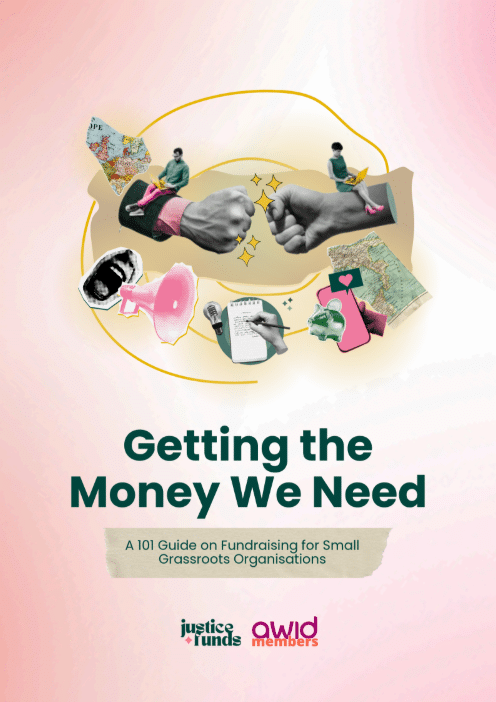
We know that fundraising can seem intimidating, especially if you are a small team, a volunteer-led group, or an organization facing complex realities on the ground with limited time and resources.
This guide is intended for activists, organizers, and community leaders in the Global South. By clicking on the image, you will have access to the guide (available in English only), as well as a database that lists funding opportunities for organizations defending the rights of women and gender minorities around the world. Let’s build a funding culture that reflects our values: solidarity, transparency, and justice!

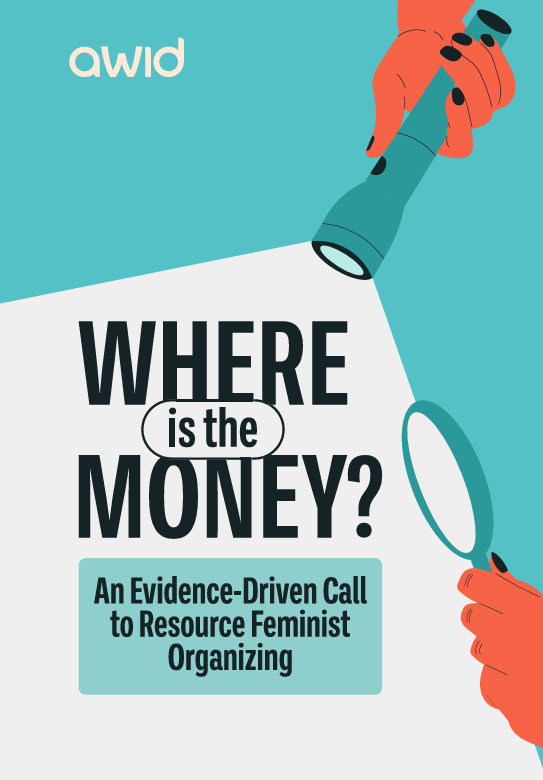
Between 2021 and 2023, 1,174 feminist and women’s rights organisations in 128 countries shared their realities by responding to AWID’s survey “Where is the money for feminist organisations?”. Their message is clear: funding to support their struggles is becoming increasingly scarce. The report celebrates the power of movement-led initiatives to shape resourcing on their own terms, while sounding the alarm on massive aid cuts, shrinking philanthropy, and escalating backlash.
To find out more about our analysis, read our article dedicated to this report.

Looking for more information?

Knowledge is the key to empowerment!

Whether you are a media outlet, an institution, an activist organisation or simply a curious soul, we are at your disposal to send you the documents that will answer your questions about the Feminists in Action initiative.